
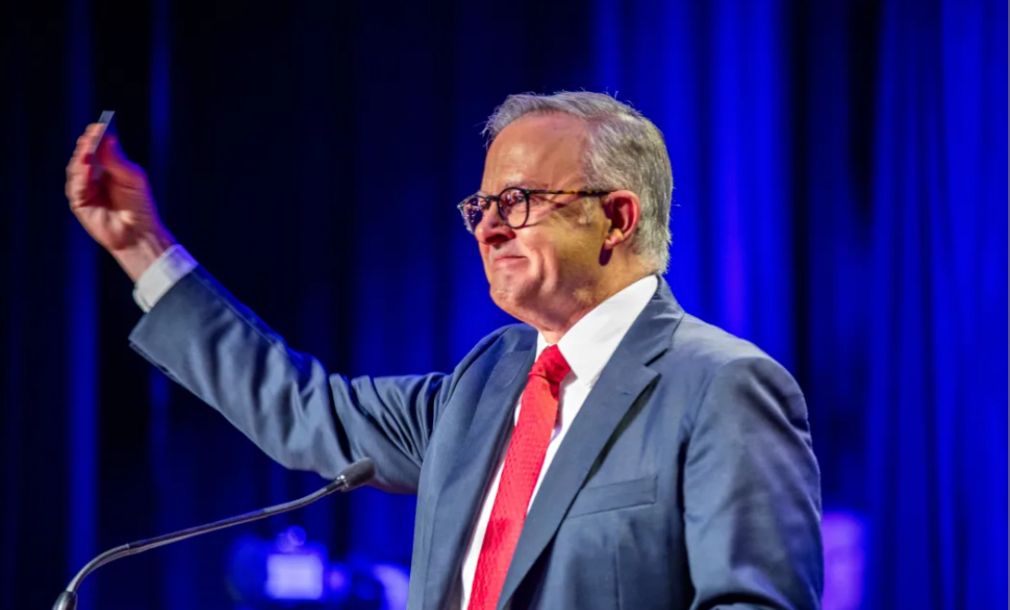
Something unusual has been happening around Anthony Albanese.
Advertisement
The Australian Prime Minister, who spent much of the previous parliamentary term attacking the Coalition for opposing Labor’s agenda, has suddenly found himself sitting across the table from Opposition Leader Angus Taylor and making deals.
Not on one minor piece of legislation.
On several politically difficult issues at once.
Gambling advertising, the NDIS and other reforms have produced a rare period of cooperation between Labor and the Coalition — an unexpected development as Australia moves deeper into Albanese’s second term.
But behind the cooperation lies a much larger political calculation.
Because while Albanese is clearing some difficult legislation from his agenda, several potentially explosive battles are still waiting.
Something Changed in Canberra
For years, Albanese enjoyed portraying his political opponents as the party that simply said “no”.
During Peter Dutton’s leadership, the Prime Minister repeatedly used that argument against the Coalition.
Angus Taylor is proving more difficult to characterise in the same way.
In August, Taylor and Albanese held a series of meetings that produced agreements across several major policy areas.
ABC political analysis described it as a rare display of bipartisanship.
The two sides found common ground on gambling regulation, changes to the NDIS, measures involving payments from social-media companies to news organisations and legislation concerning negatively geared property after the death of a partner.
For Australians accustomed to seeing Canberra dominated by confrontation, the shift was difficult to miss.
Gambling Became One of the Biggest Tests
One of the most politically sensitive negotiations concerned gambling advertising.
Pressure had been building on the government to strengthen its approach, particularly around inducements such as bonus bets designed to encourage people to gamble.
Labor ultimately reached a bipartisan agreement with the Coalition.
The resulting framework does not amount to the complete advertising ban demanded by some campaigners, and critics remain dissatisfied.
But Albanese’s government succeeded in getting legislation through Parliament and ending, at least for now, a debate that had become increasingly uncomfortable for Labor.
That required compromise.
And compromise has increasingly become part of Albanese’s strategy.
Then Came the NDIS
The National Disability Insurance Scheme presented an even larger challenge.
Its costs have continued to grow rapidly, leaving the government under pressure to demonstrate that the scheme remains financially sustainable without abandoning Australians who depend upon it.
Labor’s controversial changes eventually passed the Senate after the government reached an agreement with the Coalition and tabled 63 amendments.
The political consequences could be enormous.
As the new system is implemented, Australians with disabilities and their families will be watching closely for reductions or changes to support.
The government therefore secured something valuable by bringing the Coalition into the agreement: shared political responsibility for one of Canberra’s most difficult reforms.
For Albanese, that could prove extremely important later.
But There Are Lines He Is Not Willing to Cross
The Prime Minister’s willingness to negotiate does not mean everything is suddenly open for discussion.
That became clear during his visit to Western Australia.
An interim Productivity Commission report questioned the existing arrangements governing the distribution of GST revenue, arguing that the current system gives Western Australia too much.
Albanese’s response was straightforward.
The deal would not be rewritten.
His government openly pushed back against the commission’s proposal, with Resources Minister Madeleine King also criticising its approach.
The episode revealed the other side of Albanese’s current strategy.
He may be prepared to negotiate when compromise helps move legislation through Parliament.
But on politically sensitive commitments — particularly those involving Western Australia — he can still draw a firm line.
Why Albanese Is Doing Deals Now
Timing matters.
ABC’s David Speers noted that the government wanted to get several agreements with the Coalition completed together.
There was a reason.
Much more contentious political territory is approaching.
Immigration, housing, superannuation, taxation, data centres and other issues are expected to produce significantly more confrontation as the parliamentary term progresses.
The closer Australia moves toward another federal election, the less incentive Labor and the Coalition will have to cooperate.
Albanese therefore has an opportunity now that may not exist later.
Clear difficult legislation.
Share political responsibility where possible.
Then prepare for the fights that cannot be avoided.
Angus Taylor Changes the Equation
There is another important element in this story.
The Opposition Leader sitting across from Albanese is no longer Peter Dutton.
Taylor became Liberal leader in February 2026 and has been trying to rebuild a party facing pressure not only from Labor but from Pauline Hanson’s One Nation.
That creates an unusual overlap in political interests.
Taylor needs to demonstrate that the Liberal Party is capable of governing rather than simply protesting.
Albanese needs votes in the Senate for legislation that Labor cannot always pass alone.
For a brief period, those interests have aligned.
ABC reported that Taylor had said “yes” multiple times following meetings with Albanese, making it harder for Labor to repeat its old argument that the opposition simply blocks everything.
That does not make the two leaders allies.
It makes them useful to one another — for now.
The Political Risks Have Not Disappeared
There is a danger for Albanese in this strategy.
Compromise can help a government pass legislation, but it also means accepting responsibility for what happens afterwards.
NDIS reform is the clearest example.
If Australians begin reporting that essential support has disappeared, Labor will face the consequences regardless of whether the Coalition supported the legislation.
The same applies to gambling reform.
Campaigners demanding a complete advertising ban have already been left disappointed by the compromise reached in Canberra.
Passing legislation therefore does not necessarily end the political argument.
Sometimes it merely begins the next stage.
A Different Anthony Albanese Is Emerging
Albanese’s first term was dominated by a different political environment.
His government was new. Peter Dutton led the opposition. Labor could frequently present itself as attempting to implement its agenda against a Coalition determined to resist it.
The environment in 2026 is more complicated.
Taylor is attempting to position the Liberals as a constructive alternative government.
One Nation is competing aggressively for conservative voters.
And Labor itself must defend a record accumulated over more than four years in office.
That changes the Prime Minister’s job.
He is no longer simply explaining what his government intends to do.
He must increasingly defend what it has already done — while deciding which battles are worth fighting next.
The Quiet Strategy Behind a Very Busy August
Nothing about the past few weeks suggests Anthony Albanese is retreating from politics or facing some sudden personal crisis.
What is happening is more interesting politically.
Australia’s Prime Minister appears to be using a relatively brief period of parliamentary cooperation to move some of the government’s most difficult business off the table before the political environment becomes considerably more hostile.
The agreements with Angus Taylor demonstrate that Albanese is willing to compromise when he believes the result is worth it.
His rejection of changes to Western Australia’s GST arrangements demonstrates that there are still areas where he will not.
Together, those decisions provide a clearer picture of the Prime Minister entering the middle of his second term.
The question is whether the strategy will still work when cooperation in Canberra inevitably gives way to confrontation.
Because the easiest deals may now be behind him.