
Category:
Sports
Advertisement
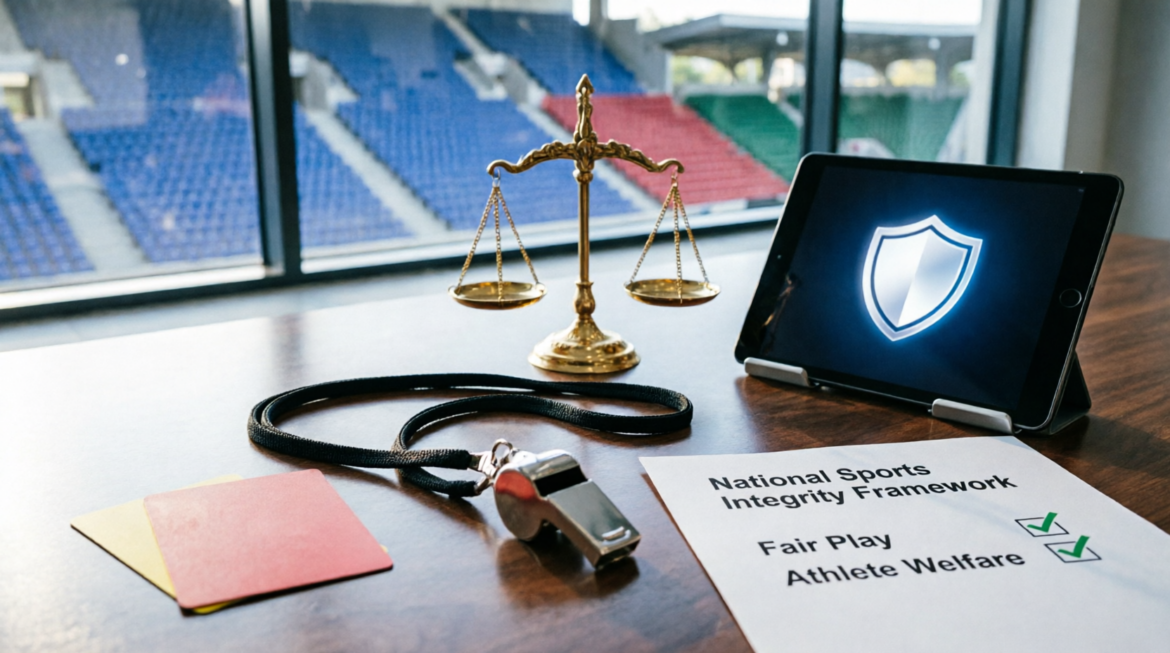
The Australian government, in partnership with Sport Integrity Australia and national sporting organizations, has launched a comprehensive new National Sports Integrity Framework designed to safeguard fair play, protect athlete welfare, and maintain public confidence in the integrity of Australian sport at all levels. The framework represents the most significant reform of sports governance in Australia in over two decades, establishing unified standards, reporting mechanisms, and enforcement protocols that apply consistently across professional, semi-professional, and community sporting competitions. The announcement was made at a national sports governance summit in Canberra, attended by leaders from over eighty national sporting organizations, athlete representatives, and government officials.
The Minister for Sport described the framework as a necessary and timely response to the evolving challenges facing modern sport, including match-fixing, doping, harassment, discrimination, and the exploitation of young athletes. “Australian sport is a national treasure, and its value depends entirely on the trust that athletes, fans, and communities place in its fairness and integrity,” the Minister stated. “This framework ensures that every participant in Australian sport, from elite professionals to weekend volunteers, is protected by clear standards and robust accountability mechanisms.” The framework was developed over eighteen months through extensive consultation with athletes, coaches, administrators, legal experts, and community members, ensuring that it reflects the diverse needs and perspectives of the Australian sporting community.
The framework establishes a national Sports Integrity Code that sets out clear behavioral standards for all participants in Australian sport, including athletes, coaches, officials, administrators, and support staff. The code addresses issues including anti-doping compliance, match-fixing prevention, child safety, anti-discrimination, and the responsible use of social media. All national sporting organizations will be required to adopt the code as a condition of government funding and recognition, creating a consistent baseline of expectations across all sports and levels of competition. The code has been developed in alignment with international best practice standards set by the World Anti-Doping Agency, the International Olympic Committee, and the United Nations Office on Drugs and Crime.
A central feature of the framework is the establishment of a national independent reporting and investigation mechanism, which will provide a safe, confidential, and accessible channel for individuals to report integrity concerns without fear of retaliation. The mechanism will be operated by Sport Integrity Australia, which has been granted expanded powers to conduct investigations, compel evidence, and impose sanctions on individuals and organizations found to have breached integrity standards. The agency has been provided with additional funding and specialist staff, including forensic accountants, digital investigators, and legal counsel, to ensure that it can effectively address the full range of integrity threats facing Australian sport. Whistleblower protections have been significantly strengthened, with legal safeguards for individuals who report concerns in good faith.
The athlete welfare provisions within the framework are particularly comprehensive, establishing minimum standards for working conditions, medical care, mental health support, and career transition assistance for professional and semi-professional athletes. The framework mandates that all sporting organizations must provide athletes with access to independent legal and financial advice, clear contractual protections, and transparent grievance resolution processes. Specific provisions address the welfare of young athletes, including limits on training loads, mandatory education requirements, and protections against exploitation by agents and recruiters. The Australian Athletes’ Association has endorsed the framework as a landmark achievement in the recognition of athletes’ rights and dignity.

Advertisement
The Australian cricket team has secured a historic series victory in commanding fashion, capping off a remarkable campaign that has captivated the nation and drawn record-breaking crowds to stadiums across the country. The final match of the series, played at the Melbourne Cricket Ground, attracted an attendance of over ninety-two thousand spectators, the largest crowd for a cricket match in Australia in over a decade. The team’s dominant performance throughout the series, characterized by aggressive batting, disciplined bowling, and exceptional fielding, has rekindled public enthusiasm for the sport and reinforced Australia’s position as a leading cricketing nation on the world stage.
The series victory was built on a foundation of outstanding individual performances and cohesive team strategy. The Australian batting lineup consistently posted imposing totals, with multiple players contributing centuries and half-centuries across the series. The bowling attack maintained relentless pressure on opposition batsmen, combining pace, swing, and tactical variation to restrict scoring opportunities and take crucial wickets at key moments. The fielding standards were exceptionally high, with several spectacular catches and run-outs that shifted momentum in Australia’s favor. The team’s captain praised the collective effort, noting that every player contributed to the series win through their specific roles and responsibilities.
The captain’s leadership was widely praised by commentators and former players, with particular recognition given to his tactical acumen and ability to inspire peak performance from his squad. “This series win belongs to every player, every support staff member, and every fan who has believed in this team,” the captain stated during the post-match presentation. “We set out to play aggressive, entertaining cricket that makes Australians proud, and I believe we have achieved that goal.” The captain also acknowledged the contributions of the coaching staff, sports scientists, and medical team, emphasizing that modern cricket success is built on a comprehensive support network that extends well beyond the playing group.
The record-breaking attendance figures have been celebrated by Cricket Australia as evidence of the sport’s enduring popularity and its capacity to unite Australians across demographic and geographic boundaries. The organization reported that ticket sales for the series exceeded initial projections by over forty percent, with strong demand from families, young people, and international visitors. The festive atmosphere at the matches, characterized by enthusiastic crowds, colorful costumes, and communal singing, has been credited with creating an inclusive and welcoming environment that appeals to both traditional cricket fans and newcomers to the sport. Cricket Australia’s chief executive noted that the series has demonstrated the commercial viability and cultural significance of Test and One Day International cricket in the modern sporting landscape.
The broadcast viewership figures for the series have also been exceptional, with television and streaming platforms reporting combined audiences of over fifteen million Australians across the series. The digital engagement metrics have been particularly strong, with social media interactions, highlights views, and fantasy cricket participation reaching unprecedented levels. This broad reach has been attributed to Cricket Australia’s investment in multi-platform content delivery, including behind-the-scenes documentaries, player interviews, and interactive fan experiences that extend engagement beyond the live broadcast. The organization’s marketing team has been praised for successfully positioning the series as a major cultural event that transcends traditional sporting boundaries.
Advertisement
The federal government has announced a substantial new funding package dedicated to strengthening grassroots sports clubs in rural and regional Australia, recognizing the vital role these organizations play in promoting physical activity, building community cohesion, and supporting the mental and physical wellbeing of residents in areas often underserved by sporting infrastructure. The initiative, valued at six hundred and fifty million dollars over five years, will provide direct grants to local sports clubs for facility upgrades, equipment purchases, coaching development, and program delivery. The announcement was made by the Minister for Sport during a visit to a rural football club in regional Victoria, where she witnessed firsthand the challenges and opportunities facing community sporting organizations.
The Minister emphasized that grassroots sports clubs are the heartbeat of rural Australian communities, providing not only opportunities for physical activity but also essential social infrastructure that combats isolation and builds community identity. “In many small towns across Australia, the local sports club is the center of community life, the place where people gather, connect, and support one another,” the Minister stated. “This funding ensures that these clubs have the resources they need to thrive and to welcome every member of their community into active participation.” The program has been designed in consultation with regional sporting bodies, local councils, and community members to ensure that funding reaches the clubs and communities that need it most.
The funding package includes several distinct streams tailored to different aspects of grassroots sports development. The Facility Upgrade Stream provides grants of up to five hundred thousand dollars for the construction and renovation of playing fields, courts, change rooms, and clubhouses. The Equipment and Technology Stream offers smaller grants for the purchase of sporting equipment, training aids, and digital tools that enhance coaching and administration. The Coaching and Volunteer Development Stream funds training programs for coaches, officials, and club administrators, addressing the chronic shortage of qualified personnel that limits the capacity of many rural clubs. The Participation Program Stream supports the delivery of structured sporting programs for children, adults, and seniors, with particular emphasis on increasing female participation and engaging people with disabilities.
A significant portion of the funding is directed toward addressing the specific challenges faced by Indigenous and multicultural communities in rural areas. Dedicated grants will support the establishment of culturally appropriate sporting programs that incorporate traditional games and activities, providing pathways for Indigenous youth to engage with organized sport while maintaining cultural connections. Multicultural sports festivals and intercultural competition events will be funded to promote social inclusion and cross-cultural understanding in communities with diverse populations. The government has partnered with Indigenous sporting organizations and multicultural affairs bodies to ensure that these programs are designed and delivered with genuine community input and cultural sensitivity.
The program also addresses the growing challenge of youth mental health in rural areas, with specific funding allocated for sports-based mental health and wellbeing initiatives. Research has consistently demonstrated that regular participation in team sports is associated with lower rates of anxiety, depression, and social isolation among young people. The funded programs will incorporate mental health literacy training for coaches and club volunteers, enabling them to identify and respond to signs of psychological distress among participants. Partnerships with headspace and other youth mental health organizations will ensure that sporting clubs can provide appropriate referrals and support services when needed.
The economic benefits of the funding package are expected to be significant for rural communities, with construction and renovation projects generating local employment and supporting regional supply chains. The government has mandated that a minimum of seventy percent of construction expenditure must be directed toward local and regional contractors, ensuring that the economic benefits remain within the communities being served. Sporting equipment purchases will also prioritize Australian manufacturers and retailers, supporting domestic industries and reducing the environmental footprint associated with imported goods. The Regional Development Australia network will assist clubs in navigating procurement processes and connecting with local suppliers.
Advertisement
The Australian national women’s soccer team, the Matildas, has delivered a commanding performance to secure a major victory in a prestigious international friendly tournament, reinforcing their status as one of the world’s elite footballing nations. The team defeated a highly ranked European opponent three goals to one in front of a passionate crowd of over forty-five thousand spectators at a major metropolitan stadium, showcasing the skill, determination, and tactical discipline that have become hallmarks of Australian women’s football. The victory comes as the team continues its preparation for upcoming major international competitions and builds on the momentum generated by their historic performances in recent World Cup tournaments.
The match was characterized by Australia’s dominant possession play and clinical finishing, with the team controlling the tempo from the opening whistle. The Matildas’ midfield orchestrated a series of intricate passing moves that consistently breached the opposition’s defensive lines, creating numerous scoring opportunities throughout the match. The opening goal came in the twenty-third minute following a beautifully executed team move involving five players, culminating in a precise finish from the edge of the penalty area. The second goal arrived just before halftime through a well-worked set piece, demonstrating the team’s versatility and preparation across multiple attacking strategies.
The head coach of the Matildas expressed satisfaction with the team’s overall performance while emphasizing the importance of continuous improvement. “Tonight was a positive result against quality opposition, and I am proud of how the players executed our game plan,” the coach stated in the post-match press conference. “However, we are focused on the long-term development of this group, and there are areas where we can still grow and become more effective.” The coach highlighted the contributions of several younger players who were given significant minutes, noting that the depth of talent in Australian women’s football is stronger than it has ever been.
The tournament victory has generated significant public enthusiasm and media attention, with television viewership figures indicating that millions of Australians tuned in to watch the match. The growing popularity of women’s football in Australia reflects broader societal shifts toward gender equality in sport and the increasing visibility of female athletes as role models for young people. Football Australia reported a thirty-five percent increase in female participation registrations over the past two years, a trend directly attributed to the success and visibility of the Matildas on the international stage. Community football clubs across the country have reported waiting lists for girls’ teams, demonstrating the grassroots impact of elite sporting success.
The commercial landscape surrounding women’s football has also transformed dramatically, with the Matildas securing several major sponsorship agreements with leading Australian and international brands. These partnerships provide crucial financial resources for player development, training facilities, and support staff, enabling the team to operate at a professional level comparable to their international counterparts. The increased investment has allowed Football Australia to expand its women’s high-performance programs, including the establishment of a dedicated women’s training center with world-class medical, sports science, and recovery facilities. The professionalization of the women’s game is widely regarded as essential for sustaining Australia’s competitive advantage in international football.
Advertisement
The Australian Olympic Committee has officially unveiled its comprehensive strategic roadmap for the preparation and delivery of the Brisbane 2032 Olympic and Paralympic Games, marking the beginning of an intensive decade-long planning process that will transform Queensland’s sporting infrastructure and elevate Australia’s position on the global sporting stage. The roadmap, developed in close collaboration with the International Olympic Committee, the Queensland state government, and federal authorities, outlines detailed timelines, investment priorities, and legacy objectives that extend far beyond the sixteen days of competition. The announcement was made at a major press event in Brisbane, attended by sporting leaders, government officials, and community representatives from across the nation.
The President of the Australian Olympic Committee described the roadmap as a once-in-a-generation opportunity to redefine what the Olympic Games can mean for a host nation. “Brisbane 2032 is not merely a sporting event; it is a catalyst for urban renewal, economic development, cultural exchange, and national pride,” the President stated. “Our roadmap ensures that every dollar invested, every venue built, and every program delivered creates lasting benefits for Queensland communities and for Australia as a whole.” The plan emphasizes sustainability, accessibility, and community engagement as core principles, with a commitment to delivering the most environmentally responsible Olympic Games in history.
The infrastructure component of the roadmap details the construction and upgrade of over thirty sporting venues across southeast Queensland, with a strong emphasis on utilizing existing facilities wherever possible. The Gabba stadium will undergo a significant redevelopment to serve as the main Olympic stadium, while new venues for aquatic sports, track cycling, and basketball will be constructed in Brisbane’s inner suburbs. The Gold Coast and Sunshine Coast will host sailing, surfing, and marathon events, leveraging their natural coastal environments. Crucially, the roadmap mandates that all new venues must have a confirmed post-Games legacy use, preventing the creation of “white elephant” facilities that have plagued previous host cities.
The athlete development pathway is a central pillar of the roadmap, with a commitment to investing over two billion dollars in high-performance sport programs over the next decade. The Australian Institute of Sport will expand its facilities and coaching capabilities, providing world-class training environments for athletes across all Olympic and Paralympic disciplines. A new National Talent Identification Program will scout and develop young athletes from regional and remote areas, ensuring that talent is nurtured regardless of geographic location. The roadmap also includes comprehensive support services for athletes, including mental health programs, career transition planning, and educational opportunities that prepare them for life beyond competition.
The economic projections associated with the Games are substantial, with independent modeling suggesting that Brisbane 2032 will generate over twenty billion dollars in economic activity and create more than one hundred and twenty thousand jobs across Queensland and the broader Australian economy. The construction phase alone will sustain tens of thousands of trades and professional positions over the next eight years, providing a significant stimulus to the building and engineering sectors. Tourism operators anticipate a surge in international visitors both during the Games and in the years following, as the global exposure positions Queensland as a premier destination for sporting tourism and cultural experiences.
Advertisement