
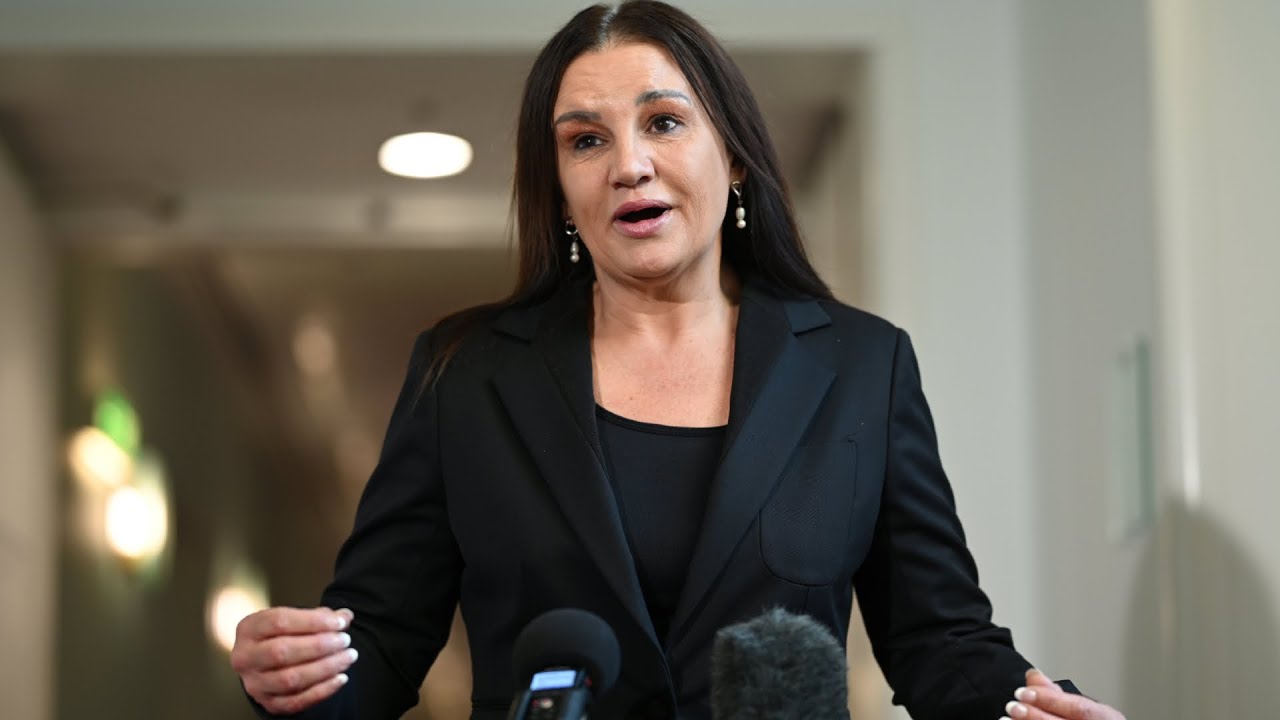
Australians have become accustomed to seeing Jacqui Lambie deliver passionate speeches in Parliament.
Advertisement
But this time was different.
Standing in the Senate, the Tasmanian senator and former Australian Army corporal revealed intensely personal details about her own health while making an emotional appeal over the treatment of Australian veterans.
The speech quickly became about considerably more than politics.
For Lambie, it was personal.
Lambie Revealed What She Had Been Going Through
During her Senate speech on August 19, Lambie revealed that she had recently undergone surgery after suffering a severe pelvic organ prolapse.
She linked her medical problems to injuries and physical strain dating back to her years in the Australian Army.
Lambie said she had faced an urgent decision about treatment and ultimately paid approximately $7,000 herself for surgery rather than waiting for care through the Department of Veterans’ Affairs system.
It was an unusually personal disclosure from a politician already well known for speaking openly about her experiences as a veteran.
But Lambie was not telling the story simply to discuss her own health.
She wanted to make a much broader point.
Her Anger Was Directed at the Veterans’ Health System
At the centre of Lambie’s intervention was the government’s proposed $5,000 annual cap on allied health services for veterans.
She argued that the limit could have serious consequences for veterans requiring extensive ongoing treatment.
Her criticism was particularly focused on female veterans.
Lambie argued that women who have served in the military can face health problems that are poorly understood or inadequately accommodated within the existing system.
The senator became emotional as she described what she believed was a failure to properly recognise the medical consequences military service can have on women’s bodies.
At one point, she directly appealed to Prime Minister Anthony Albanese and senior ministers to reconsider the policy.
This Was Not a Typical Political Speech
Lambie’s parliamentary style has always been direct.
Yet even by her standards, the speech stood out.
Rather than relying primarily on statistics or political arguments, she used her own medical experience to illustrate what she believes other veterans can encounter when seeking treatment.
Her language was deliberately confronting.
She challenged male politicians to imagine how they would respond if they faced an equivalent medical problem themselves.
Behind the provocative language was a straightforward argument: veterans who suffer injuries or illnesses connected with their service should be able to receive the treatment they require.
The Government Was Forced to Respond
The intervention did not simply disappear after Lambie left the Senate chamber.
Veterans’ Affairs Minister Matt Keogh acknowledged problems with how the issue had been handled, although the government had not, at the time of the reports, committed to abandoning the proposed cap.
The issue therefore remains politically active.
For Lambie, that means her deeply personal disclosure has become part of a larger confrontation over how Australia supports former members of its armed forces.
There Is a Reason This Issue Means So Much to Her
Before entering politics, Lambie served in the Australian Army between 1989 and 2000.
Her military experience has subsequently become one of the defining elements of her political career.
Veterans’ affairs, Defence administration and the treatment of former service personnel have repeatedly appeared in her parliamentary work.
She has also spoken publicly about her own longstanding health problems.
Earlier this year, reports detailed severe back pain she had experienced and the treatment she required.
The latest revelation therefore adds another dimension to a story Lambie has been discussing for years.
She is not approaching veterans’ health solely as a senator examining government policy.
She is also approaching it as someone who has personally navigated the system.
And Her Political Career Is Far From Over
The emotional nature of the speech could easily create the wrong impression if separated from its context.
Lambie has not announced that she is leaving the Senate because of her health.
Official parliamentary records continue to list her as a Tasmanian senator, and she was re-elected at the 2025 federal election.
Nor has she stepped away from the Jacqui Lambie Network.
Instead, her latest appearance demonstrates that she remains actively involved in some of the political battles that have defined her career.
Why This Speech Is Likely to Be Remembered
Politicians frequently speak about health care.
It is considerably less common for them to describe their own bodies, medical procedures and experiences in such personal detail to make their argument.
Lambie chose to do exactly that.
Her disclosure transformed an argument over a $5,000 health-care cap into something much more immediate: a discussion about what happens to the men and women who carry the physical consequences of military service long after leaving the Defence Force.
Whether the government ultimately changes its policy remains to be seen.
But Lambie’s message was unmistakable.
After years of campaigning for veterans, she was no longer speaking only about what she had heard from other former soldiers.
This time, she was telling Parliament what had happened to her.