
cobalt-brook.com
Politics

New Bipartisan Initiative Launched to Boost Renewable Energy Projects Across All States

by cms@editor July 29, 2026
written by cms@editor
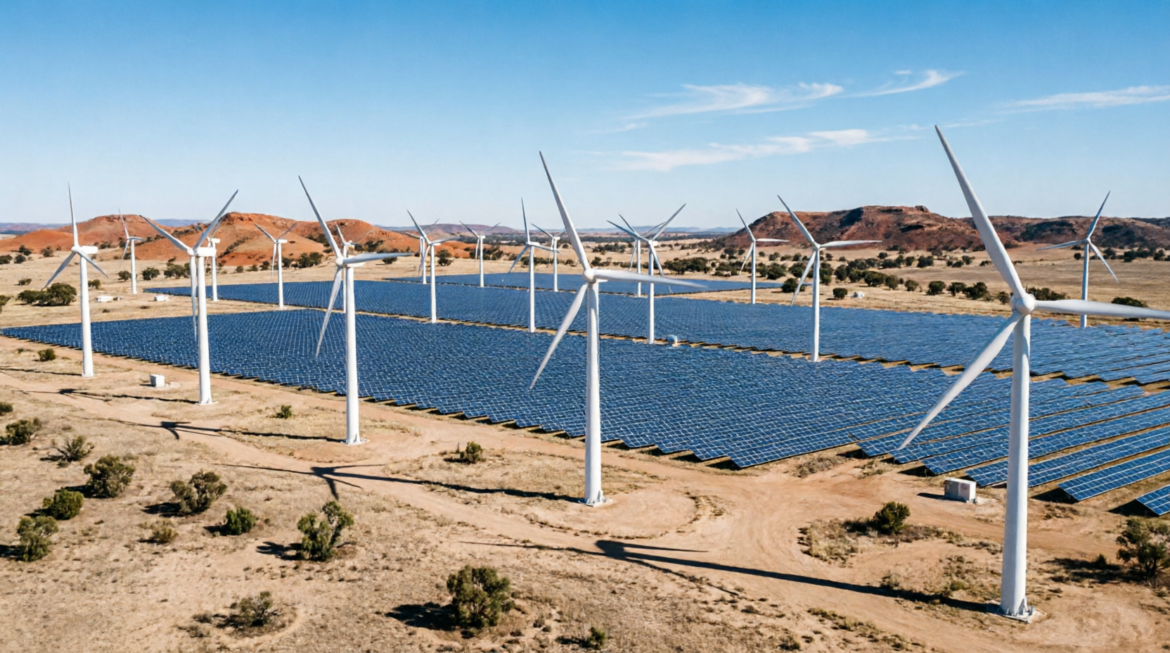
In a rare and highly significant display of political unity, federal and state leaders have officially launched a new bipartisan initiative aimed at accelerating renewable energy projects across all Australian states. The collaborative framework, championed by Prime Minister Anthony Albanese and strongly supported by state premiers, seeks to streamline the complex approval process for solar, wind, and green hydrogen facilities. “Climate change and the energy transition are not partisan issues; they are fundamental national imperatives that require a unified and decisive response,” Albanese remarked during the joint press conference in Canberra. The initiative establishes a dedicated national task force to coordinate critical infrastructure upgrades, ensuring that the national electricity grid can efficiently handle the massive influx of renewable capacity.
Minister for Climate Change and Energy, Chris Bowen, detailed the operational mechanics of the new framework, emphasizing that it will significantly reduce the time it takes to get major renewable projects from proposal to construction. The initiative includes targeted funding for regional communities that are hosting these projects, ensuring that they reap direct economic benefits through community dividend funds and local infrastructure upgrades. By addressing the concerns of regional residents, the government aims to build strong local support for the energy transition, transforming potential points of friction into opportunities for shared prosperity. The task force will also work to resolve land-use conflicts, ensuring that agricultural productivity and environmental conservation are maintained alongside energy development.
Industry leaders and renewable energy advocates have widely praised the bipartisan approach, noting that long-term political certainty is absolutely crucial for attracting the massive private investment required to rebuild the energy system. The Australian Renewable Energy Agency (ARENA) and the Clean Energy Finance Corporation (CEFC) will play pivotal roles in the initiative, providing co-investment and financial guidance to de-risk new projects. By aligning federal and state regulatory frameworks, the initiative will eliminate duplicative processes and create a more predictable environment for developers. This unified strategy is expected to significantly advance Australia’s transition to net-zero emissions while creating tens of thousands of sustainable, high-paying jobs.
A key component of the initiative is the “Rewiring the Country” program, which focuses on building the transmission lines necessary to connect renewable energy zones to population centers. The government has committed to co-funding these critical transmission projects with the states, ensuring that the physical infrastructure keeps pace with generation capacity. State premiers have welcomed this financial commitment, noting that transmission upgrades have historically been a bottleneck for renewable development. By accelerating these projects, the initiative will help to lower wholesale electricity prices, providing long-term cost relief to households and businesses across the nation.
The initiative also places a strong emphasis on workforce development and job transitions for workers in the traditional fossil fuel industry. A new national skills fund will be established to provide retraining and upskilling opportunities, ensuring that workers can seamlessly transition into the renewable energy sector. The government has partnered with trade unions and industry bodies to design training programs that meet the specific needs of the new energy economy. This focus on a “just transition” ensures that no community is left behind as the nation moves towards a cleaner, more sustainable energy future.


Pages: 1 2

Politics

Prime Minister Albanese Highlights National Unity and Economic Resilience at National Press Club

by cms@editor July 29, 2026
written by cms@editor
Prime Minister Anthony Albanese delivered a compelling and highly anticipated address at the National Press Club in Canberra, focusing extensively on the interconnected themes of national unity and economic resilience. Speaking to a packed room of senior journalists, industry leaders, and political commentators, Albanese outlined his government’s comprehensive vision for a stronger, more cohesive, and economically secure Australia. He began his address by praising the nation’s economic fundamentals, noting with pride that Australia currently boasts one of the lowest unemployment rates in the developed world, alongside a robust jobs market that continues to absorb new entrants. “Our economic resilience is not an accident; it is the direct result of deliberate, inclusive, and forward-looking policies that consistently put Australians first,” the Prime Minister stated confidently.
A significant portion of the address was dedicated to the concept of social cohesion, with Albanese urging citizens to embrace the country’s diverse cultural fabric as a profound source of national strength. He highlighted the success of Australia’s multicultural society, noting that diversity drives innovation, enriches our cultural landscape, and strengthens our global connections. The Prime Minister firmly rejected divisive rhetoric, emphasizing that unity does not mean uniformity, but rather a shared commitment to democratic values, mutual respect, and the rule of law. He called on all Australians to engage in constructive dialogue and to reject the polarization that is increasingly evident in other parts of the world.
Turning to the economic outlook, Albanese detailed the government’s strategy for managing inflation without triggering a recession. He explained that the Reserve Bank’s monetary policy is being supported by the government’s fiscal discipline, ensuring that public spending is targeted and does not add to inflationary pressures. The Prime Minister highlighted the importance of wage growth that is aligned with productivity, ensuring that workers receive a fair share of the economic pie without sparking a wage-price spiral. He also discussed the government’s efforts to address skills shortages through targeted migration policies and massive investments in vocational education and training.
National security and geopolitical stability were also prominent topics in the address. Albanese outlined the government’s commitment to maintaining a strong and modern defense force, capable of deterring threats and protecting national interests. He discussed the importance of the AUKUS partnership and the broader alliance network in the Indo-Pacific region, emphasizing that Australia must be prepared for a more contested and complex strategic environment. However, he also stressed that strength in defense must be paired with robust diplomatic engagement, noting that Australia will continue to advocate for peaceful resolution of disputes and the rules-based international order.

Pages: 1 2

Politics

Federal Government Unveils Comprehensive Cost-of-Living Relief Package for Australian Families

by cms@editor July 29, 2026
written by cms@editor
Addressing the pressing economic concerns of citizens across the nation, the federal government has introduced a comprehensive cost-of-living relief package designed to provide immediate and substantial support to Australian families. Prime Minister Anthony Albanese presented the multi-billion dollar initiative in the House of Representatives, highlighting its strategic focus on reducing energy bills, providing targeted tax relief, and increasing Medicare rebates. “Australians are working hard, and it is the fundamental duty of this government to ensure their hard work translates into a better, more secure quality of life,” Albanese declared during his speech. The package is meticulously designed to alleviate the financial pressure on households while maintaining the overall stability of the national economy.
The Treasurer, Jim Chalmers, detailed the specific measures included in the package, emphasizing that they are fully funded and fiscally responsible. A central component of the relief is a significant reduction in energy bills for millions of households, achieved through targeted rebates and investments in cheaper renewable energy. The government will also implement adjustments to the tax brackets, ensuring that low- and middle-income earners keep more of their hard-earned money. Furthermore, the package includes a substantial increase in the Medicare bulk-billing incentive, aiming to make visiting a general practitioner more affordable and accessible for all Australians, particularly those holding concession cards.
Childcare subsidies have also been enhanced, providing crucial relief to young families struggling with the high costs of early childhood education. By increasing the subsidy rate and expanding the activity test, the government aims to make childcare more affordable and encourage greater workforce participation among parents. Economists have noted that this measure not only provides immediate household relief but also addresses long-term structural issues within the labor market. The opposition has welcomed the support for families but has constructively called for further action to assist small businesses facing similar cost pressures.

Pages: 1 2

Politics

Australia Strengthens Diplomatic Ties with Pacific Nations in New Strategic Partnership

by cms@editor July 29, 2026
written by cms@editor

In a significant and highly anticipated move to reinforce its geopolitical standing, the Australian government has formalized a new strategic partnership with key Pacific Island nations. The announcement, led by the Minister for Foreign Affairs, Penny Wong, and Prime Minister Anthony Albanese, marks a new era of diplomatic engagement and mutual cooperation in the region. The comprehensive partnership focuses heavily on climate resilience, maritime security, and sustainable economic development, reflecting the shared priorities and urgent challenges faced by Pacific communities. This initiative represents a cornerstone of Australia’s broader foreign policy strategy to remain the partner of choice in the Pacific.

During the recent Pacific Islands Forum, Prime Minister Albanese reiterated Australia’s unwavering commitment to being a reliable, respectful, and responsive partner. “The Pacific is our home, and our collective future depends on deep, meaningful cooperation and mutual respect,” the Prime Minister noted in his opening address to regional leaders. The agreement includes substantially increased funding for climate adaptation projects, recognizing that Pacific Island nations are on the frontlines of global climate change. Australia will provide advanced meteorological equipment, fund coastal protection infrastructure, and support renewable energy transitions to help these nations build resilience against extreme weather events.

Enhanced joint maritime patrols are another critical component of the new strategic framework, designed to combat illegal, unreported, and unregulated fishing. This illegal activity has long threatened the food security and economic stability of Pacific communities. By providing additional patrol boats, aerial surveillance capabilities, and training for local maritime forces, Australia aims to protect the rich marine resources of the region. The Minister for Foreign Affairs emphasized that securing maritime borders is essential for the sovereignty and economic prosperity of Pacific Island nations, and Australia stands ready to provide the necessary logistical and financial support.

Diplomatic experts and international relations scholars have widely praised the initiative as a proactive and necessary step that prioritizes genuine partnership over traditional aid models. By elevating the diplomatic presence and increasing the frequency of high-level visits, Australia aims to foster long-term stability and counter growing geopolitical competition in the region. The government has made it clear that its approach is not driven by zero-sum geopolitical games, but by a genuine desire to support the development and security of its Pacific neighbors. This nuanced approach has been well-received by regional leaders, who value Australia’s commitment to Pacific-led solutions.

Pages: 1 2

Politics

Prime Minister Anthony Albanese Announces Historic Infrastructure Investment for Regional Australia

by cms@editor July 29, 2026
written by cms@editor

Prime Minister Anthony Albanese today unveiled a landmark infrastructure investment package aimed at revitalizing regional Australia, marking one of the most significant financial commitments to rural and remote communities in the nation’s recent history. Speaking from a major regional logistics hub in New South Wales, the Prime Minister emphasized that this historic funding will effectively bridge the long-standing connectivity and economic gap between urban centers and rural communities. The comprehensive plan allocates billions of dollars toward upgrading critical regional highways, expanding high-speed broadband access, and modernizing local transport and freight networks across the country.

“Our regional communities are the absolute backbone of this nation, driving our agricultural output and resource sectors while preserving our cultural heritage,” Albanese stated during his keynote address to a gathered assembly of local leaders. “This investment is fundamentally about building new opportunities, ensuring that every Australian, regardless of their postcode, has access to the modern infrastructure needed to thrive in the twenty-first century.” The initiative has already garnered widespread bipartisan support, with opposition leaders publicly acknowledging the critical and urgent need for targeted regional development to maintain national productivity and social cohesion.

The federal government will partner closely with state and territory authorities to fast-track these vital projects, a collaborative approach expected to create thousands of local construction and engineering jobs. Minister for Infrastructure Catherine King highlighted that the funding will specifically target freight routes, reducing supply chain bottlenecks and lowering the cost of goods for rural businesses. By upgrading key arterial roads and investing in regional rail networks, the government aims to significantly boost the efficiency of the agricultural and mining sectors, which remain crucial pillars of the national economy.

Furthermore, the package includes dedicated funding for regional hospitals and educational facilities, ensuring that population growth is matched by essential social infrastructure. The Prime Minister noted that a thriving regional economy requires more than just physical transport links; it requires robust community services that attract and retain skilled workers. New medical centers and upgraded school facilities will be prioritized in areas experiencing demographic shifts, ensuring that regional towns can support growing families and provide a high quality of life for all residents.

Pages: 1 2

Newer Posts
Older Posts

Recent Posts

  • Aged Care Sector Implements New Quality Standards to Ensure Dignity and Comfort for Seniors
  • National Preventive Health Campaign Successfully Promotes Wellness and Early Detection Programs
  • Regional Hospitals Receive Multi-Billion Dollar Upgrade to Enhance Patient Care and Facilities
  • Breakthrough in Medical Research: Australian Scientists Develop Innovative Treatment for Rare Diseases
  • Medicare Expands Coverage to Include Essential Mental Health Services for All Australians

2026

cobalt-brook.com
We use cookies to improve website performance and user experience. If you continue to browse the site, you agree to the use of cookies. You can disable cookies at any time.